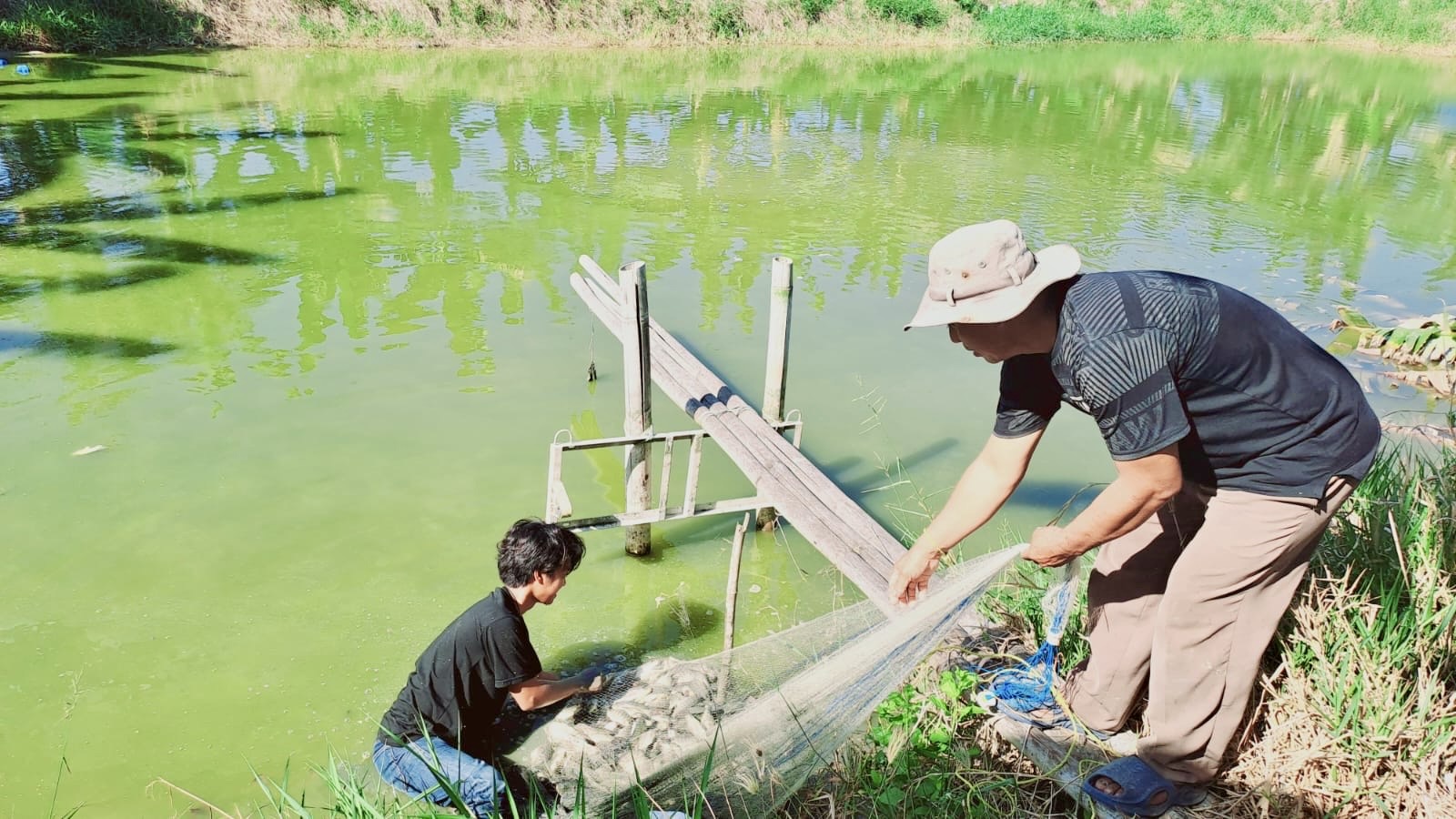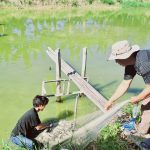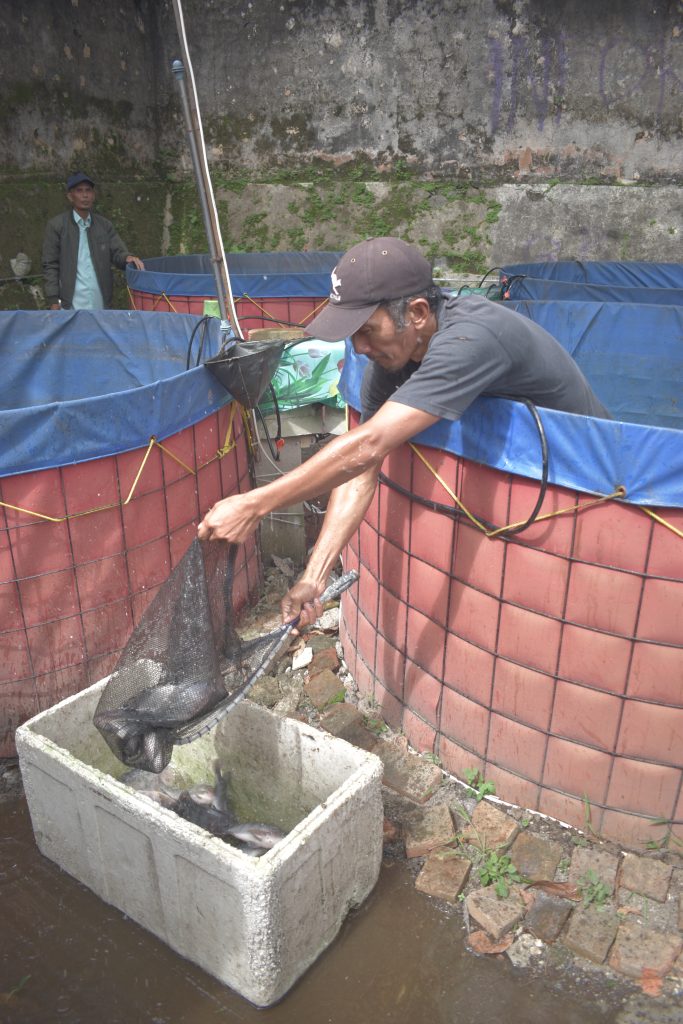
One morning, a tilapia biofloc group and the extensions were busy in the Gunung Batu sub-district area of Bogor City, West Java. This activity was preparing for the harvest of Sipanen tilapia in a circular pond.
Sipanen Biofloc does not use molasses in its farming system, but instead uses a formula called prebiomix (available at BRPBATPP Bogor) as a mineral source needed by bacteria in the flocculation process. The productivity of Sipanen biofloc tilapia in the Bogor City group reached 17-20 kg/m2, with harvest sizes ranging from 3-6 fish per kilogram.
The sipanen biofloc tilapia system widely practiced in Bogor City is not limited to circular ponds; some also use rectangular ponds. The Sipanen biofloc tilapia farmers at the harvest site were established in July 2024, along with four other groups in Bogor City.
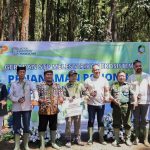
The five groups were formed as an effort to alleviate stunting in Bogor City. Members are community leaders and families at risk of stunting (KRS). The five groups received assistance from the Bogor City Department of Food Security and Agriculture (DKPP) with five ponds per location, called Sipanen biofloc tilapia farming packages. The harvest will then be distributed to stunting and stunting-prone families within the groups’ respective areas.
The harvest sites are located in Bogor City, specifically in Gunung Batu Village, West Bogor District, and four other locations: Tanah Sareal District, including Kedung Waringin and Kedung Badak Villages; and South Bogor District, including Pamoyanan and Rangga Mekar Villages. Each location has five ponds: four 2-meter-diameter ponds and one 4-meter-diameter pond. For this program from the Bogor City DKPP, each group consists of 10-12 members. There are approximately two other groups and one Islamic boarding school.