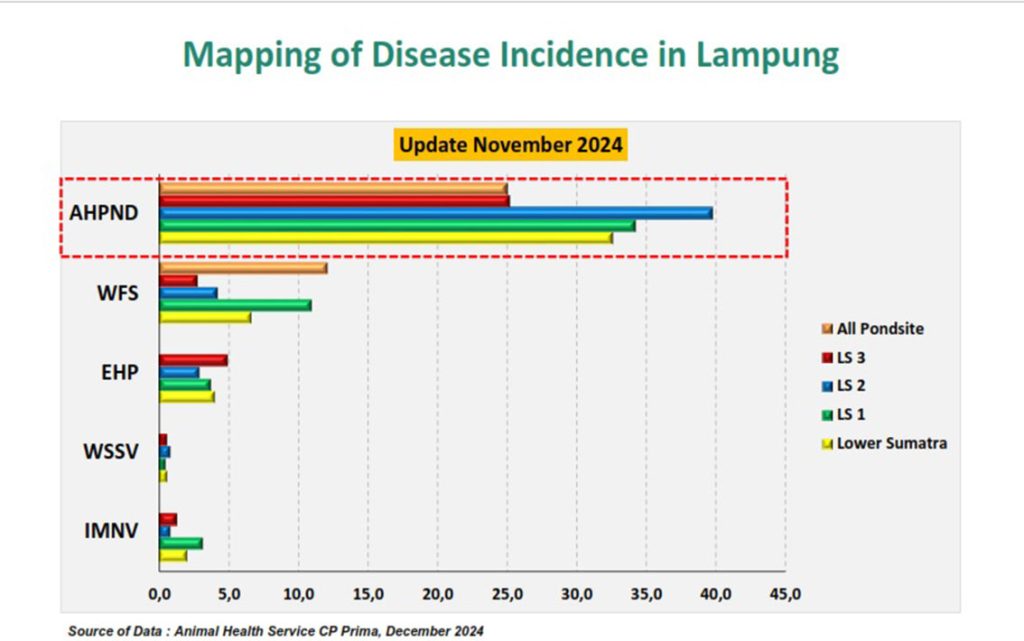
Discussions to find solutions to shrimp diseases were carried out by various stakeholders. Fivi Najmushabah, Deputy Head of Hatchery Project and Improvement PT CP Prima stated that pond management is a dominant factor in determining the smoothness of shrimp cultivation compared to feed quality and seed quality.
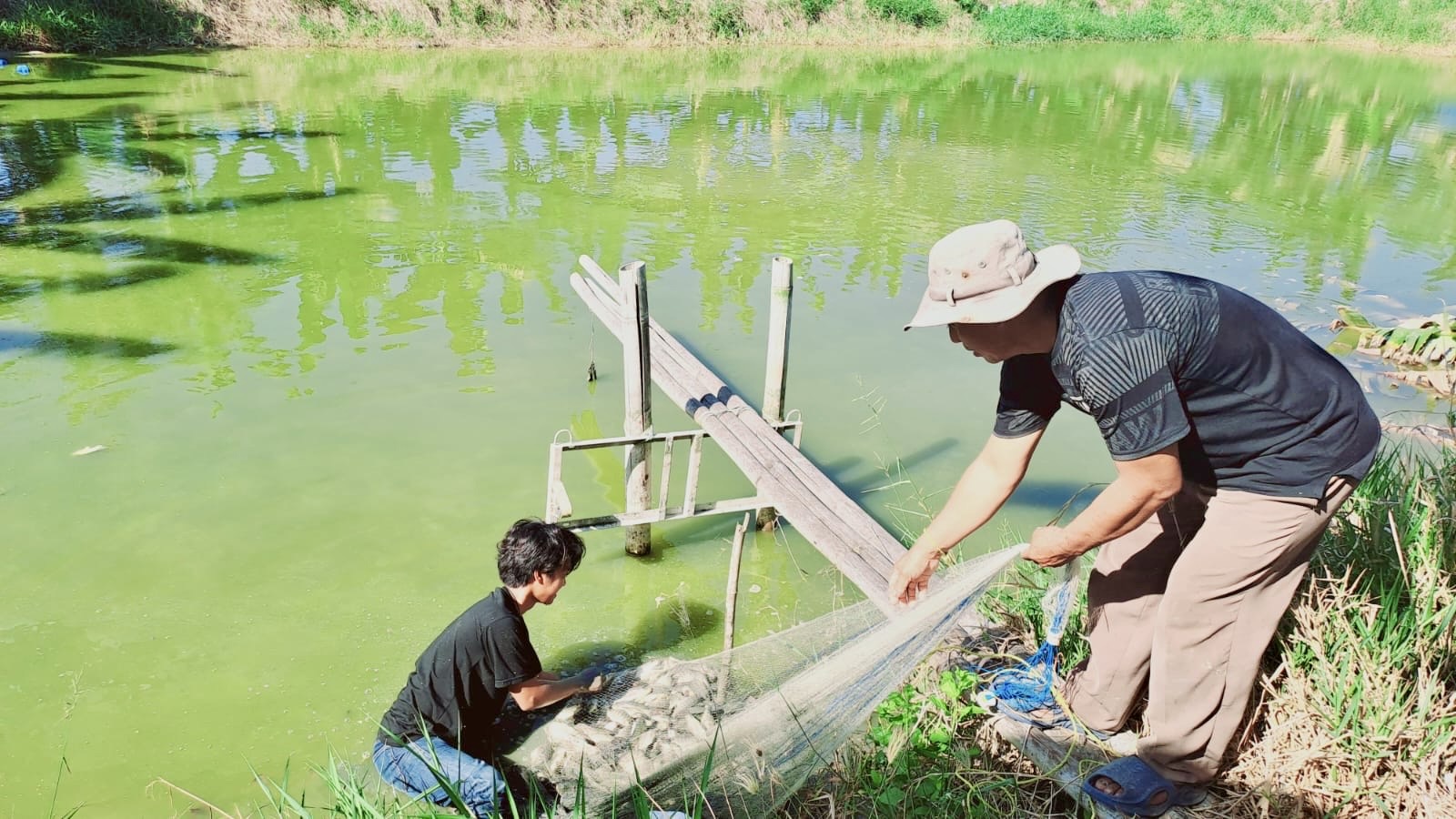
“The one that makes the biggest contribution to performance indicators in ponds is management. Although feed quality and seed quality make a lower contribution, both are still important,” she said starting the discussion material with the topic ‘Shrimp Culture Can Definitely Make a Profit’ which was held in collaboration with PT CP Prima and the Aquaculture Practitioner Communication Forum (FKPA) in Bandarlampung-Lampung some time ago.
She explained that feed and seed quality contribute 15-25%, while pond management contributes 50 to 70%. From pond harvest data from all over Indonesia, it also shows that variations in pond performance caused by PL maintenance factors in the hatchery contribute more than variations caused by parent genetics.
Of all the parameters observed, FCR, SR, biomass, ADG and MBG, pond management remains the biggest contributing factor to cultivation performance. To optimize the hatchery’s contribution to success in the pond, several programs are carried out, including the procurement of quality broodstock by collaborating/cooperating with breeding company broodstock providers.
Furthermore, producing SPF broodstock that are suitable for the Indonesian region. Then programs are also carried out to produce fry according to best aquaculture practices (BAP) standards. Among them is by increasing biosecurity, not only on the final product but also on production inputs and during the cultivation process in the hatchery.