Life in Tilapia Ponds
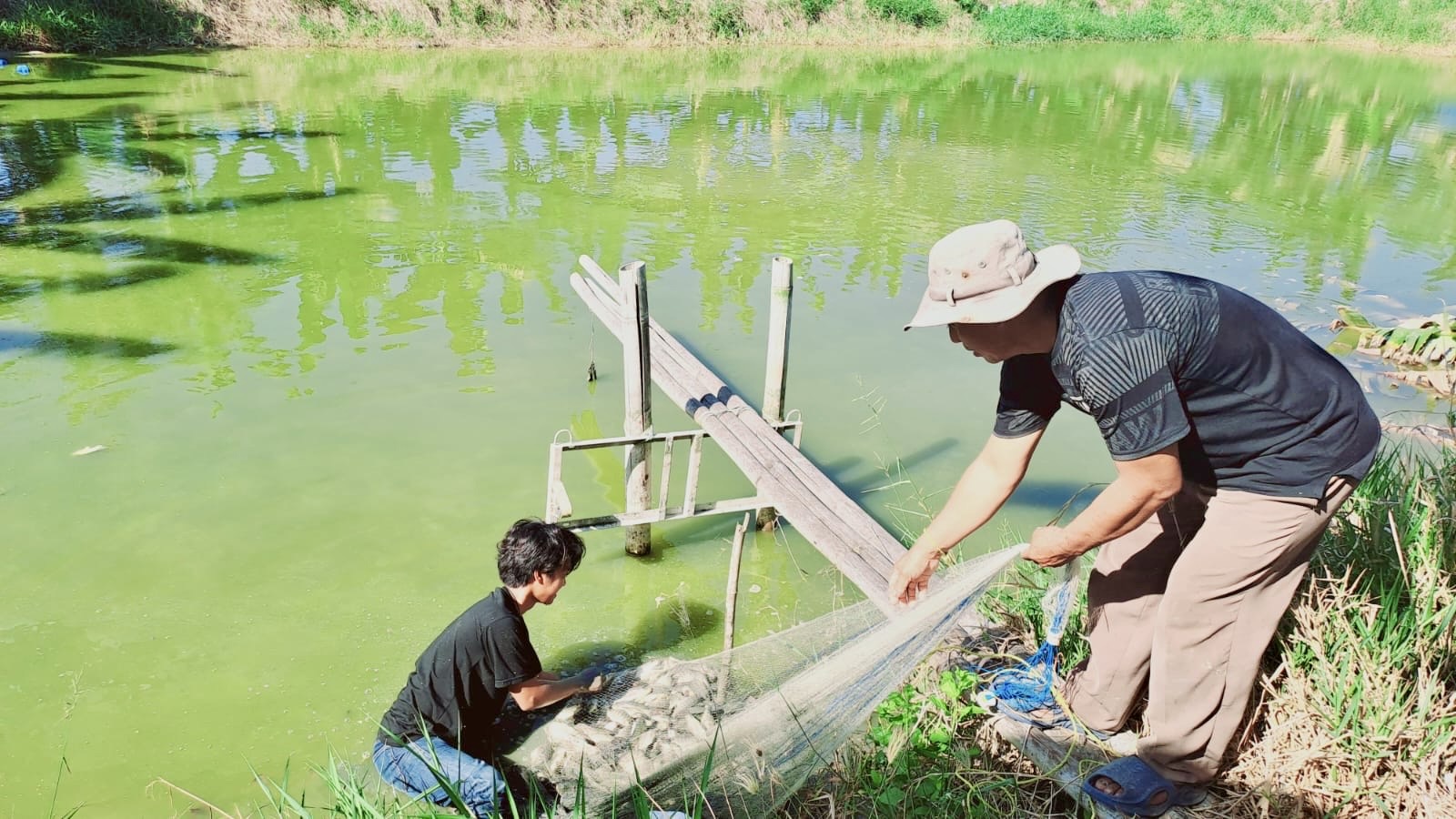
Amidst the surge of young people flocking to the technology sector as a career path, a handful are taking a different path. Yurid Kushendarsyah from Tasikmalaya, West Java, is building his future from something simple: tilapia cultivation. He chooses to play it safe by cultivating several strains simultaneously, such as Nirvana, Tilapia Sakti, and other popular strains on the market. All undergo a fertilization process with the hormone methyl testosterone to accelerate growth.
He knows the shape of each strain by heart; some are full-bodied ovals, some are elongated, and some are round and solid. “But for traders, shape isn’t important. What matters is that they look big,” he said casually (August 19). However, he knows some strains can be harvested faster, up to 7–12 days apart.
This 29-year-old has been familiar with the aquatic world since college. “Back in college, I had a hobby of raising fish, from catfish, pangasius, gourami, to tilapia. Why did I choose tilapia? Because it’s simple, easy to cultivate, popular, and has a stable price,” he recalled with a smile. From that hobby, the business he now runs in Kawalu, Tasikmalaya, was born.
Meanwhile, Abdul Rohman Abi from Bogor, West Java, prefers experimentation. He is currently testing the NiFi red tilapia. Previously, he had raised Bangkok red tilapia, which can grow to 300–500 grams in just 104 days from 15 grams of seed, or 7 months if started from larvae.
“But NiFi is easier to obtain, plus the parent stock is clear. It has SKAI and CPIB certificates,” he explained (August 21). According to him, quality assurance from the start is key. NiFi’s superiority is also evident in its faster adaptation and quarantine process compared to other strains.
Abi’s introduction to the world of fish has a different story. At a young age, he not only works as a tilapia farmer but is also known as a fisheries content creator, biofloc consultant, and educator at IPB University. He believes the fisheries sector is often overlooked, even though it holds enormous potential. “During the pandemic, this sector continues to thrive. The competition isn’t as intense as technology. In fact, this presents a huge opportunity,” he said confidently.